Potty Parade
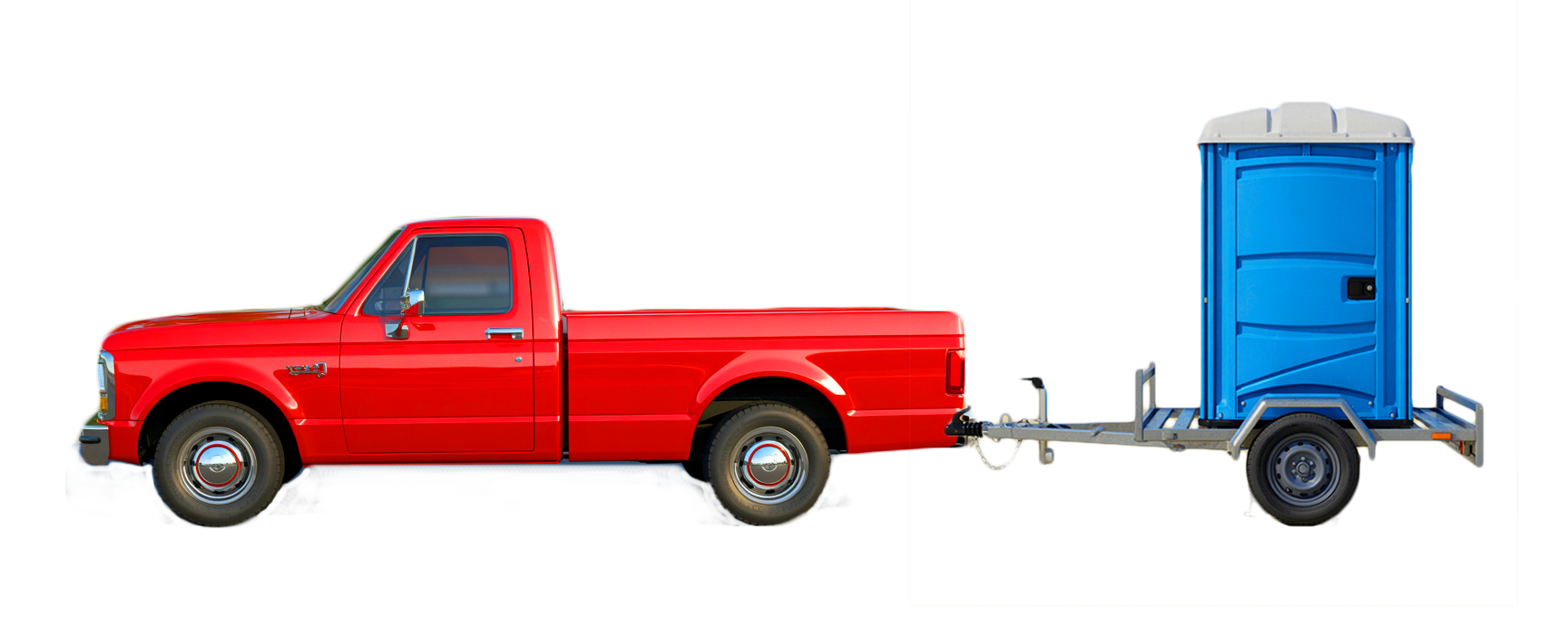
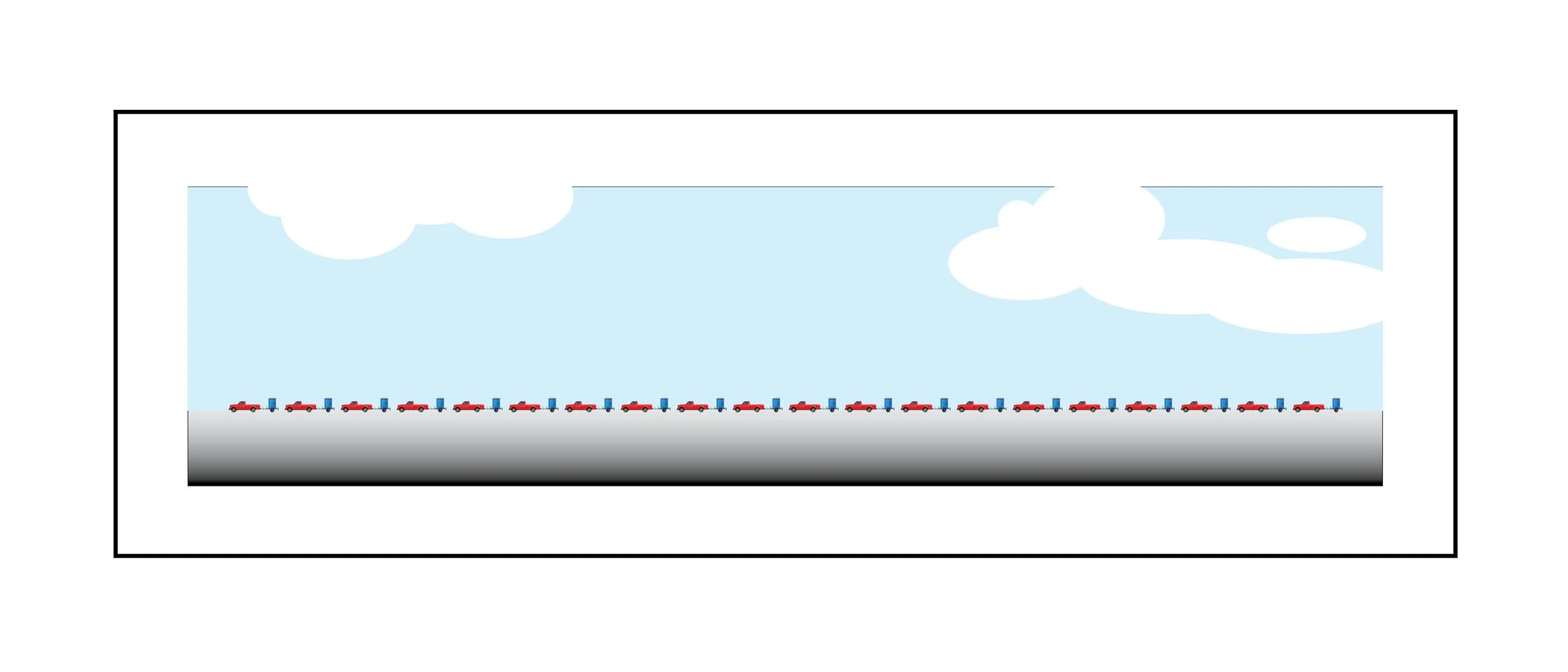
Potty Parade is a mobile public artwork that transforms everyday urban streets into a stage for the unexpected. For two to four hours, a fleet of twenty identical red pickup trucks, each towing a single sky-blue Porta-Potty, moves deliberately through densely populated neighborhoods. The convoy is escorted by two to three motorcycle officers who pause traffic at intersections, allowing the parade to pass with the ceremonial rhythm of a formal procession.
The work questions the boundaries between the mundane and the ridiculous, the private and the public. Porta-Potties—objects typically hidden and utilitarian—become symbols of shared experience, absurdity, and curiosity when placed in motion within familiar streetscapes. By transforming functional objects into subjects of spectacle, the piece challenges audiences to reconsider what constitutes art, who it is for, and how it can be encountered.
This performance is designed to meet people where they are, turning ordinary commutes, errands, or walks into encounters with the unexpected. It creates moments of interruption, curiosity, and reflection, compelling viewers to engage—whether through laughter, surprise, or contemplation—with a scene that is at once familiar and surreal.
Potty Parade also explores rhythm, repetition, and collective perception. The identical trucks and their carefully measured spacing produce a visual and auditory cadence that unfolds gradually as the convoy moves. For those who witness it repeatedly, patterns emerge and small variations—the slight sway of a trailer, the echo of engines—become part of an evolving, almost musical experience.
Ultimately, the work is a meditation on attention and presence. It asks viewers to notice, to reconsider assumptions about ordinary objects and daily routines, and to engage with art not as a distant or static object, but as an event that flows through their streets and their lives, momentarily reshaping the human landscape.
Potty Parade is a recurring, performative artwork, designed to appear anywhere at any time. Each staging is unique, fleeting, and capable of surprising, engaging, and challenging those who encounter it.
Potty Parade is a mobile public artwork that transforms everyday urban streets into a stage for the unexpected. For two to four hours, a fleet of twenty identical red pickup trucks, each towing a single sky-blue Porta-Potty, moves deliberately through densely populated neighborhoods. The convoy is escorted by two to three motorcycle officers who pause traffic at intersections, allowing the parade to pass with the ceremonial rhythm of a formal procession.
The work questions the boundaries between the mundane and the ridiculous, the private and the public. Porta-Potties—objects typically hidden and utilitarian—become symbols of shared experience, absurdity, and curiosity when placed in motion within familiar streetscapes. By transforming functional objects into subjects of spectacle, the piece challenges audiences to reconsider what constitutes art, who it is for, and how it can be encountered.
This performance is designed to meet people where they are, turning ordinary commutes, errands, or walks into encounters with the unexpected. It creates moments of interruption, curiosity, and reflection, compelling viewers to engage—whether through laughter, surprise, or contemplation—with a scene that is at once familiar and surreal.
Potty Parade also explores rhythm, repetition, and collective perception. The identical trucks and their carefully measured spacing produce a visual and auditory cadence that unfolds gradually as the convoy moves. For those who witness it repeatedly, patterns emerge and small variations—the slight sway of a trailer, the echo of engines—become part of an evolving, almost musical experience.
Ultimately, the work is a meditation on attention and presence. It asks viewers to notice, to reconsider assumptions about ordinary objects and daily routines, and to engage with art not as a distant or static object, but as an event that flows through their streets and their lives, momentarily reshaping the human landscape.